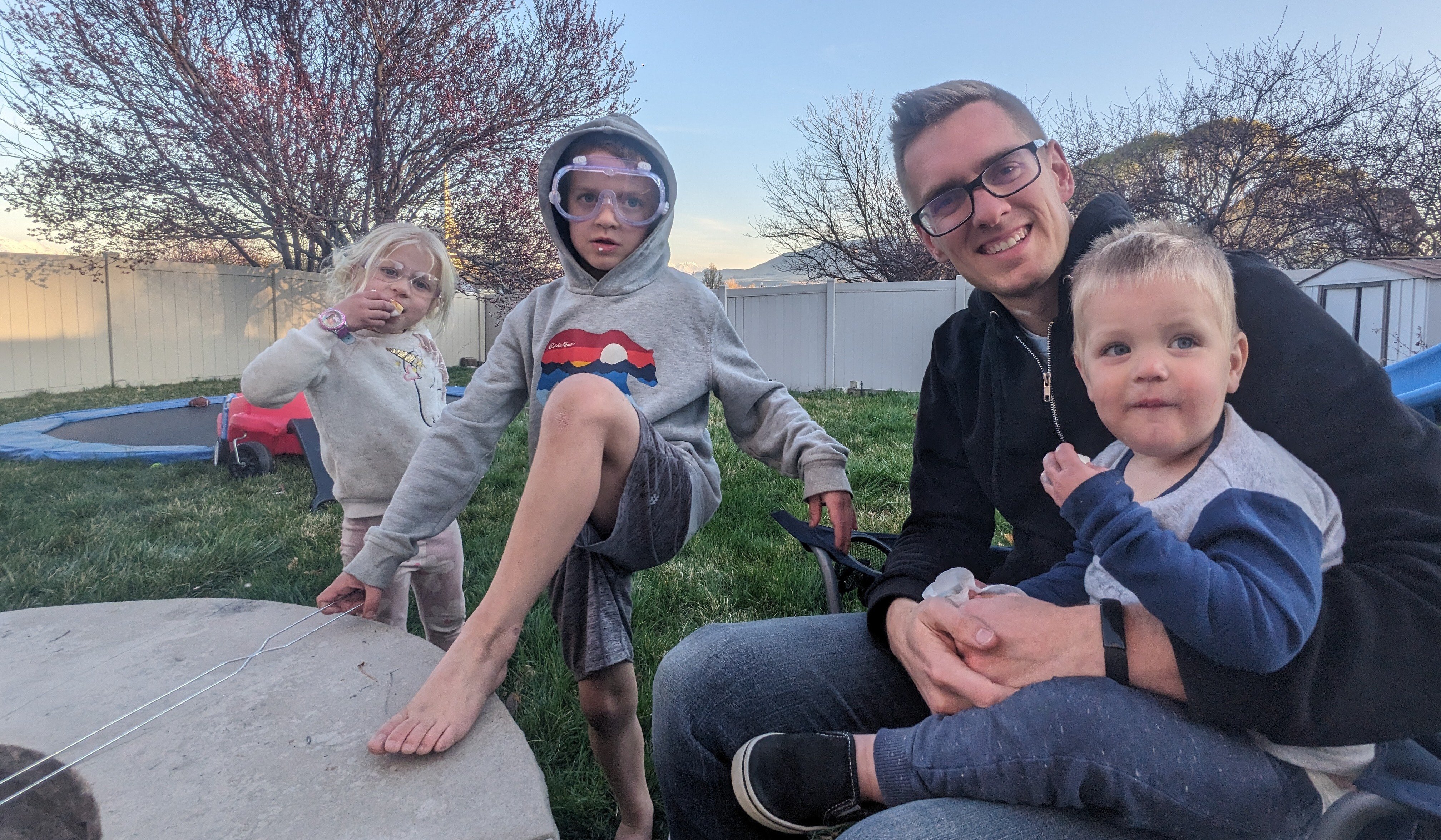
What’s your role at Ursa Health, and what do you do?
I am a data integration engineer, so my main responsibility is making sure that our clients have the data they need for their analytic use cases. In practice, that looks like making sense of the data packages provided by our clients and fitting them into the Ursa Core Data Model. Only once we have our models properly populated with high-quality data can the magic of Ursa really delight our clients, so my focus is to make sure that all our data is properly cleaned and vetted before it heads to the analytic logic.
Can you share a little about your background?
If you would have asked me as a teenager what career I was going to pursue, I would have said something about law or accounting. Data and healthcare were not on my radar. But then I had an experience early in my college years that turned my perspective around. I was doing some volunteer work and was asked to analyze a spreadsheet of our organization's metrics. I remember that seeing the data for our organization opened a flood of new ideas of ways I could help improve our operations. It was my first major experience seeing how useful data could be in business operations, and I was hooked. Once I got back to school, I studied information systems with the goal of doing cool things with data after graduating.
I ended up at a company that did analytics consulting for healthcare companies, mostly hospitals. We did a lot of quality improvement projects, helping our clients assess their performance, identify variation, and then drive meaningful change. Some of my favorite projects focused on reducing emergency department boarding times at a busy hospital, limiting the number of surgical site infections after invasive colon surgery, improving the accuracy of the hospital registration process, and getting high-risk patients in for annual wellness visits. Along the way, I worked with a wide variety of healthcare datasets and organizations, including even partnering on some international projects.
Why did you decide to work for Ursa Health?
First, Ursa has solved some problems that I had not thought were possible to solve. I’d long imagined a healthcare data model that standardizes best practices so an analysis created for one client can be seamlessly applied to others. Despite seeing a lot of smart people working on that issue, I had never seen success in this regard. But the Ursa data model does indeed allow us to do that!
Second, based on my experience working with a no-code tool before, I believed that this type of tool would only ever be able to handle very simple tasks, maybe only 3-5% of the tasks I was given. I was used to building everything with handwritten, idiosyncratic SQL. I was floored in my interview when I was told that 95% of the work at Ursa is done within Ursa Studio. Having a no-code tool that worked so well seemed too good to be true. I had to check it out to see for myself!
Lastly, I was really impressed with the people that I interacted with. Ursa seemed like a great company full of smart, friendly people. I listened to the people in the interviews and said, "I want to learn to understand and talk about data like these people do."
What do you find to be the best part about working with Ursa Health?
Honestly, the three things that drew me to Ursa have all proven to be exactly what I hoped for. I am continually impressed with the depth of Ursa Studio and the wide range of transformations that it can handle. It’s even more exciting to play a small part in its ongoing development and help make it even better. Just recently, a feature that I had suggested was pushed to production. And the people have been even better than I imagined. We have a fun team that is full of expertise in so many different aspects of healthcare. I have really enjoyed being a sponge and soaking in as much as I can while I have been learning the ropes.
What is the one thing people are surprised to learn about you?
For a while in college, I was really involved in sports broadcasting. I was the assistant producer of a daily sports talk TV show, which meant that sometimes when the boss was on vacation, I was in charge of coordinating guests, deciding on topics to cover, choosing when to go to commercial break, etc. I also got to play roles on the live sporting events - sitting on the press row and telling the referees when to start the game, keeping track of stats to show on the broadcast, those kinds of things. It was a lot of fun!